Written by Nina Evans for THE ARTISTS FORUM MAGAZINE
Edited by Amos White V for THE ARTISTS FORUM, INC
Photos: Richard Hana and Jaehyeong Lee courtesy of The Rose: Come Back to Me
REVIEWER RATINGS:
4 out of 5 stars
THE ROSE: COME BACK TO ME
NEW YORK, NY (March 3, 2025) What does ‘making it’ on your own terms in international music industries look like? The Rose: Come Back To Me is a new documentary following South Korean indie-rock band The Rose, navigating their independent return to the spotlight, ending their two year hiatus. Over the course of their career, as the band fights for creative control, they must also reckon with the consequences (in terms of mental health issues, public perception, and more) of believing in and betting on themselves. In addition to watching the film, I had the chance to speak with director Eugene Yi and producer Diane Quan about what this documentary means to them.
The band consists of singer and guitarist Woosung (Sammy) Kim, singer, guitarist and synth player Dojoon (Leo) Park, drummer Hajoon (Dylan) Lee, and bassist Jaehyoung (Jeff) Lee. Each member, individually, was at one point, trained in K-Pop, training their instrumental, vocal and dance skills intensely while also adhering to strict standards about things like image, diet, and social media. Ultimately, they each felt like K-Pop was not the right genre or lifestyle for themselves, and they all dropped out of their own accord, meeting each other and forming The Rose organically through busking and jamming together.
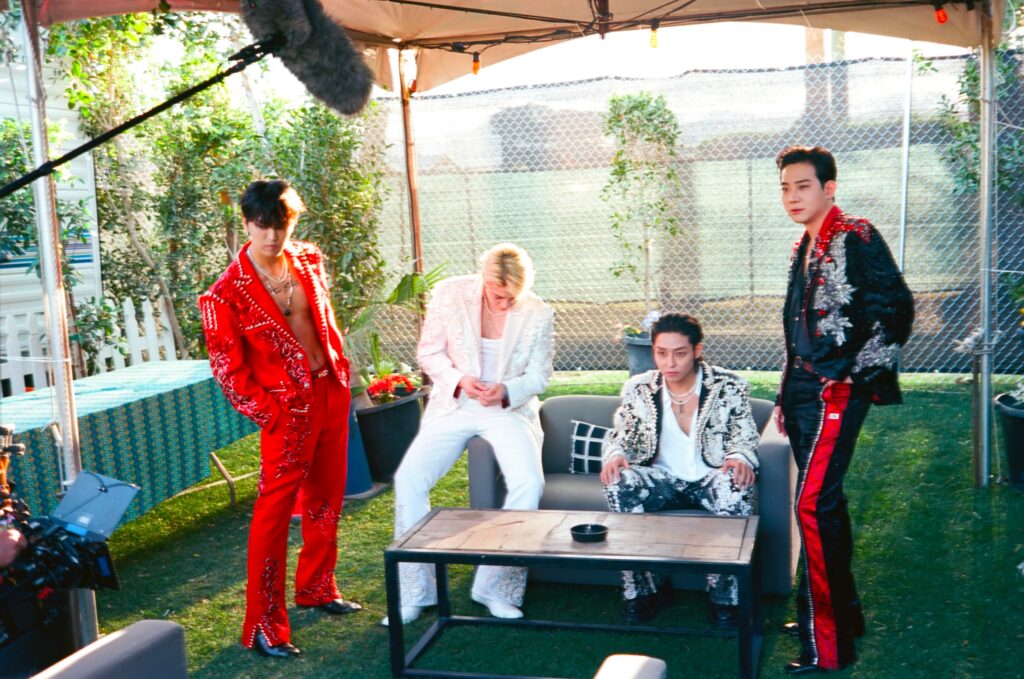
Photo by Richard Hama
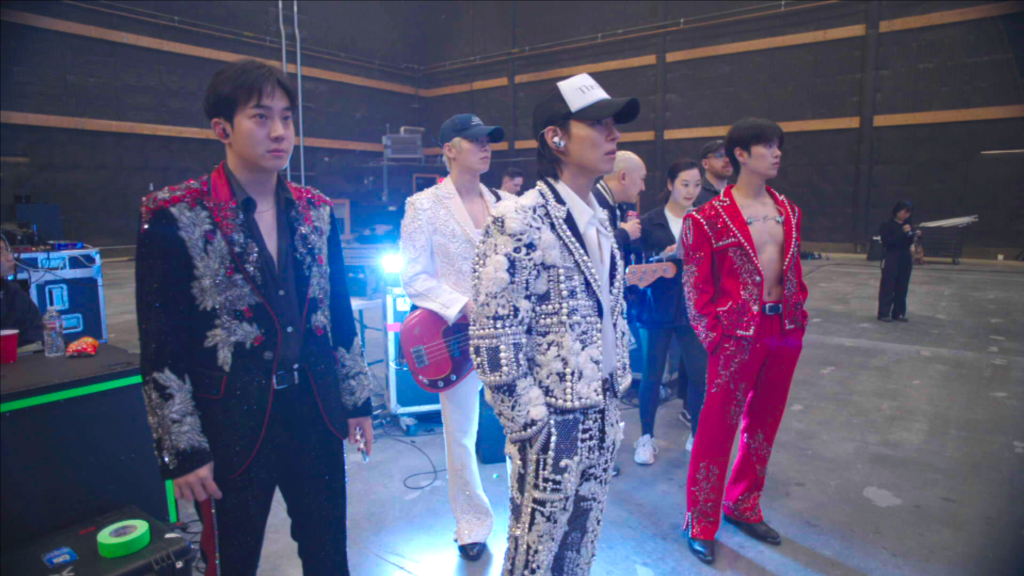
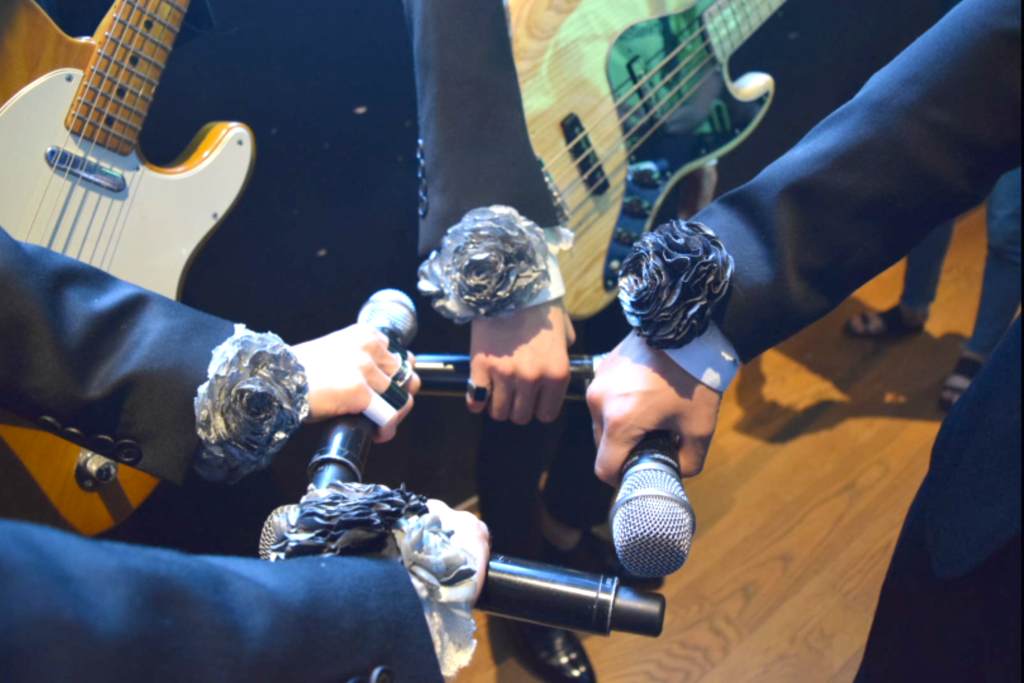
The Rose’s sound blends softer, songwriting-forward influences like Jason Mraz and The Script with fuller indie rock sounds and some synth-pop. Each member contributes their own particular style to the mix, and the musicianship of the group is impressive. All of them are multi-instrumentalists, and throughout the film, we get to see them play live in very casual, stripped settings. In one scene, Jaehyoung, on bass, duets with his father, who once had his own band and plays drums. Jaehyoung rips out a funky, jazzy riff that demonstrates clear mastery of the instrument across genres.
Director Eugene Yi speaks highly of the band’s musicianship, having watched them write in intimate settings throughout the filming of the documentary. “It just seemed like magic,” he said. “just really see each of them jump in and collaborate and build idea upon idea upon idea until they came to a song. And sometimes the song would work, and sometimes they would decide they wanted to keep working on it. You know, the results were always reflecting how amazing their creative chemistry was.”
Often called “The Big 4,” four major labels (HYBE Corporation, SM Entertainment, JYP Entertainment, and YG Entertainment) are affiliated with most major releases in South Korea. Rock is not a predominant figure amongst those releases. “You’ll see mainstream K-Pop groups maybe occasionally have a rock song that will be part of their album, but [rock will] not necessarily be their identity,” Yi explains,“And so the genre sets The Rose apart, but also the fact that they are not on one of the major [South] Korean labels.”
That independence didn’t come easy. In order to set out on their own, The Rose had to challenge the machine. Early on, they signed to J&Star Company, but immediately and frequently felt misaligned with what the label and what they wanted to make. Their first single, “Sorry,” wasn’t ‘upbeat’ enough for the label’s standards and subsequently, The Rose had to fight to promote it. It became an impactful breakout nonetheless. They were also pressured to have a formal frontman, and at times, singer Woosung was encouraged to go solo. But from the very beginning, the band chose each other. They lived together and practiced together every day, and felt opposed to singling out any one of them.
Ultimately, after a lot of friction and disagreements, the band decided to depart from their label, but even that proved difficult. Their lawsuit to end their contract, citing mistreatment, could have put them in extreme debt and went on for years. It hurt their public image, and kept them from making new releases. On top of that, not even a month after The Rose filed their suit, the COVID-19 pandemic began. Three of them, excluding Woosung, who is an American citizen, decided to do their mandatory military service during that time, and the band went on full hiatus.
Two years later, they won the lawsuit, finished their service, and reunited. After so much time and change, they knew creative freedom and agency was their utmost priority; they made the difficult decision to found their own label, partnering with American band Far East Movement’s Transparent Arts production company for management and mentorship. The future was unclear, but it became clear they wanted whatever success they achieved to rest on the bedrock of their own vision. “I, especially in the Asian community,” explains producer Diane Quon, “I feel like often we’re trying to meet expectations, instead of doing what we feel passionate about, or doing it the way we feel most comfortable. And I hope [the film] encourages folks to not be afraid to follow your heart.”
One of the most interesting threads in the documentary is The Rose’s complex relationship to K-Pop. On one hand, the K-Pop system is strenuous and demands a lot from its trainees. Woosung talks candidly about his experience in the film, noting extreme dieting bordering on starving and a lack of individual identity, saying, “I felt like I was a puppet in their show.”
On the other hand, they acknowledge that K-Pop bands’ meteoric success abroad in recent years established more Asian representation in music and directed a spotlight at music coming out of Korea. “K-Pop, as a genre, paved the way,” notes Jaehyoung, “And because it paved the way, we’re able to perform and be part of the new landscape.”
The Rose’s fans also participate in some of the genre’s traditions, for example, illuminating the crowds at concerts with lightsticks. The Rose doesn’t necessarily want to shed their tie to K-Pop, but rather not be constrained to the pre-cut dimensions and perceptions of it. The preconceived notion that some outsiders might have, says Yi, “would be that they are controlled by the agencies, that they don’t get to make a ton of their own choices and all kinds of things like that, that ultimately are dehumanizing to the people who are in it. Honestly, it connects to racial stereotypes, too, sometimes. About, like, Korean people or East Asian people being robots or not really being necessarily people who have that sense of agency.”
Yi continues, “The hope, I think, that we have for, you know, the film and for the conversation that our film might start is really just to ask the question of why that preconception might even exist.”
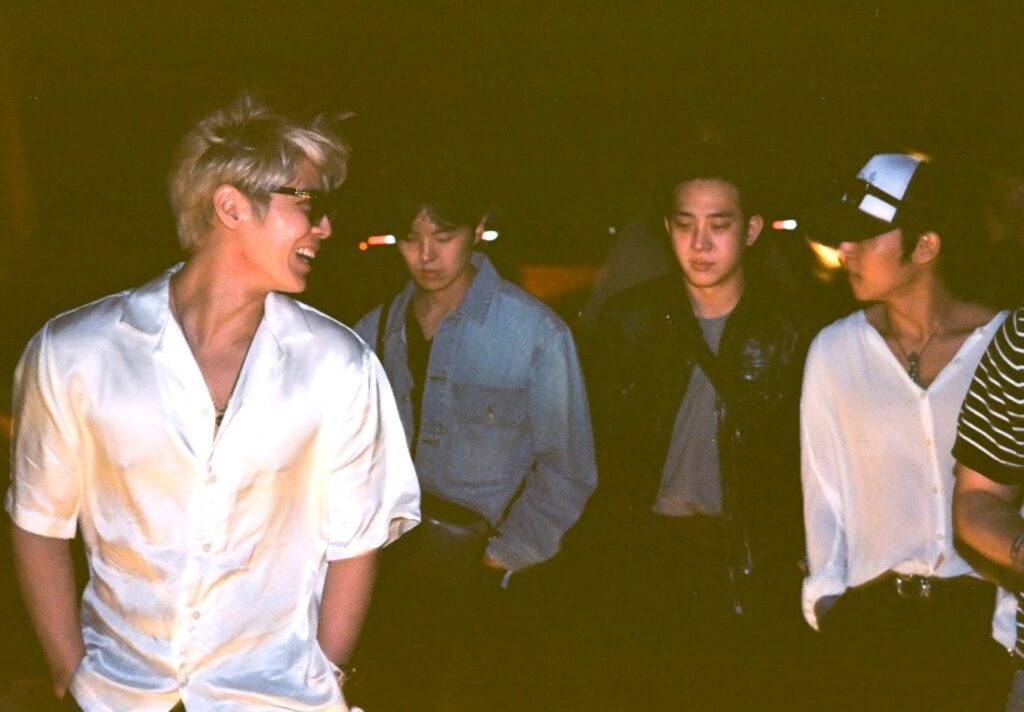
This film is applicable to a wide audience. Personally, I don’t often find myself in the world of K-Pop, and as an outsider, it was thought-provoking to see a nuanced perspective on the band’s pop origins and their chosen, rock direction. Those who aren’t well versed have a chance to learn something new about a music scene they’re not necessarily part of. Fans of The Rose get a chance to catch up on what they missed while the band was on hiatus, and a vulnerable look into conversations about mental health and perseverance.
The Rose: Come Back To Me is in theaters internationally now. Fans can also see extra footage from the film in the band’s individual trailers on YouTube, each highlighting interview clips that didn’t make it to the final cut.
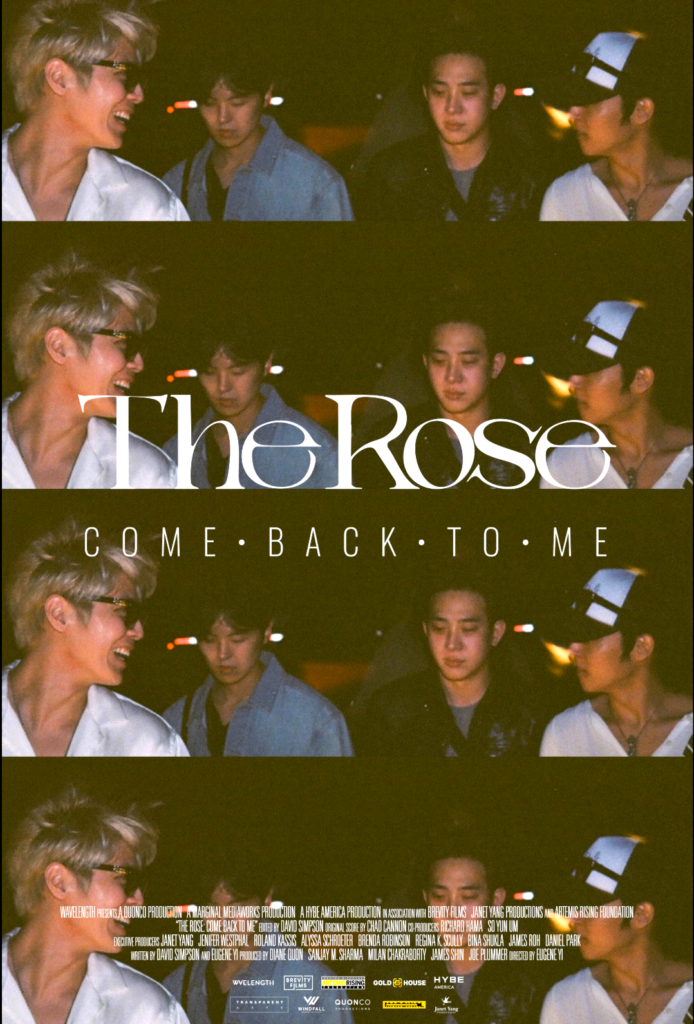
For more about The Rose: Come Back to Me, visit: therosedoc.com
For more about The Rose, visit: officialtherose.com
